


OGSolarStore
18650 Sodium-Ion Battery Cell (Layered Oxide) Na-ion for DIY 12V, 24V, 48V Battery Packs
18650 Sodium-Ion Battery Cell (Layered Oxide) Na-ion for DIY 12V, 24V, 48V Battery Packs
11 in stock
Couldn't load pickup availability
- ✓ Ships in 2 business days
- ✓ Tested before shipping
Share
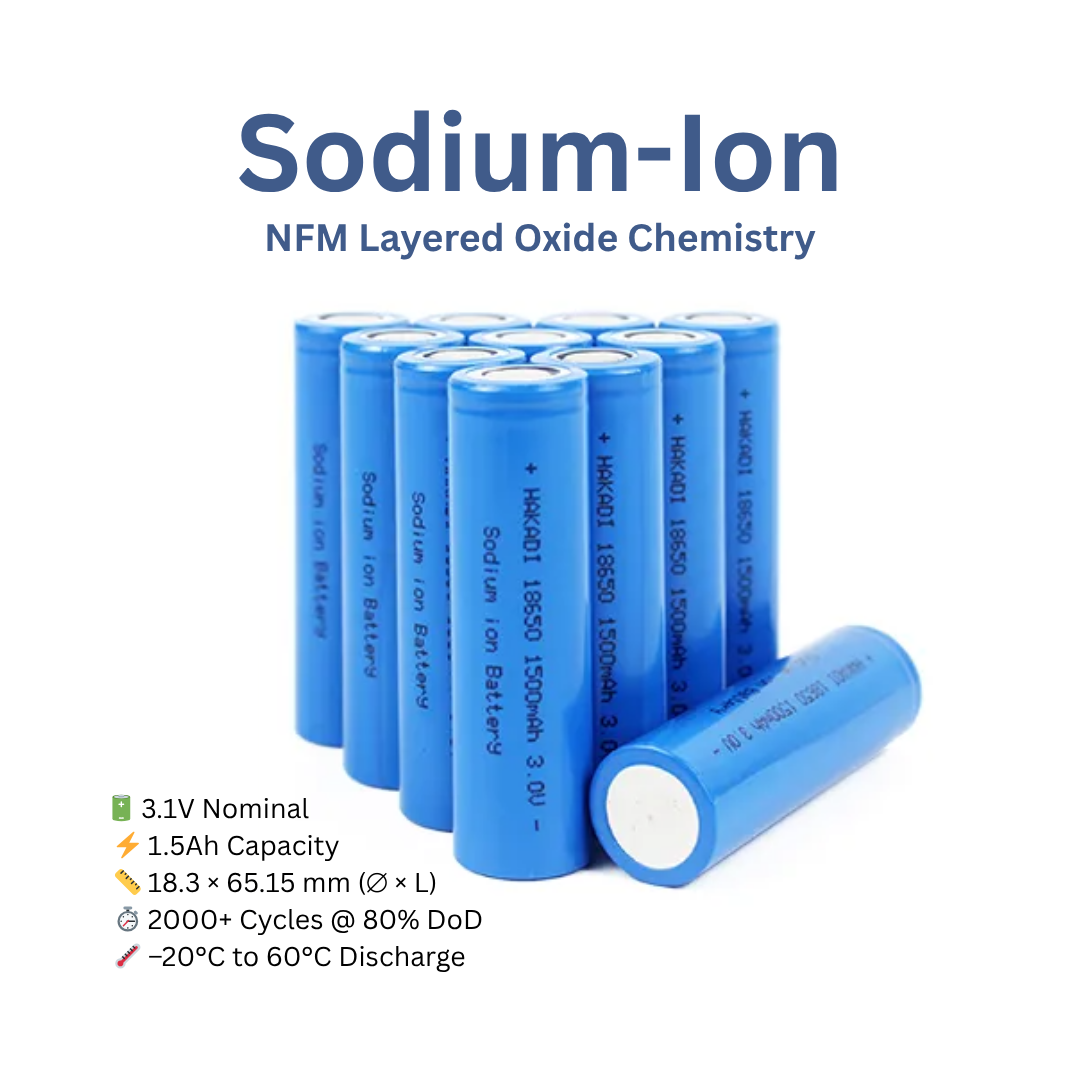
Build your own 12V, 24V, 48V, or 72V DIY battery pack with these 18650 sodium-ion cells, the cost-effective alternative to lithium-ion and LFP cells for off-grid solar, e-bikes, and cold-climate storage.
1,500 mAh per cell, 3.10V nominal, layered oxide sodium-ion chemistry. Drop-in 18650 form factor that works with the holders, spot welders, and nickel strip you already have.
Quick Specs:
| Form Factor | 18650 (18.4 mm x 65.3 mm) |
| Nominal Voltage | 3.10V |
| Capacity | 1,500 mAh (1,530 mAh typical) |
| Energy | ~4.65 Wh |
| Energy Density | 128 Wh/kg |
| Charge / Discharge Cut-off | 4.10V / 1.50V |
| Max Continuous Discharge | 3C (4,500 mA) @ 25°C |
| Max Continuous Charge | 1C (1,500 mA) |
| Internal Impedance | ≤20 mΩ |
| Operating Temperature | Charge: 0°C to 45°C / Discharge: -30°C to 60°C |
| Cycle Life | ≥1,000 cycles to 80% SOH |
| Weight | 37.0 ±0.5 g |
| Chemistry | Sodium-ion (Layered Oxide) |
These rechargeable Na-ion 18650 cells are designed for DIY battery builders, off-grid solar systems, e-bikes, scooters, and anyone tired of paying lithium prices for a chemistry that struggles in the cold. Sodium is more abundant than lithium and refines for less, which keeps the cost per kWh down and the supply chain stable.
Why sodium-ion instead of LFP or lithium-ion:
- Cold-weather performance. Rated for discharge down to -30°C, where LFP and NMC suffer significant capacity loss. Charging is supported at 0°C and above.
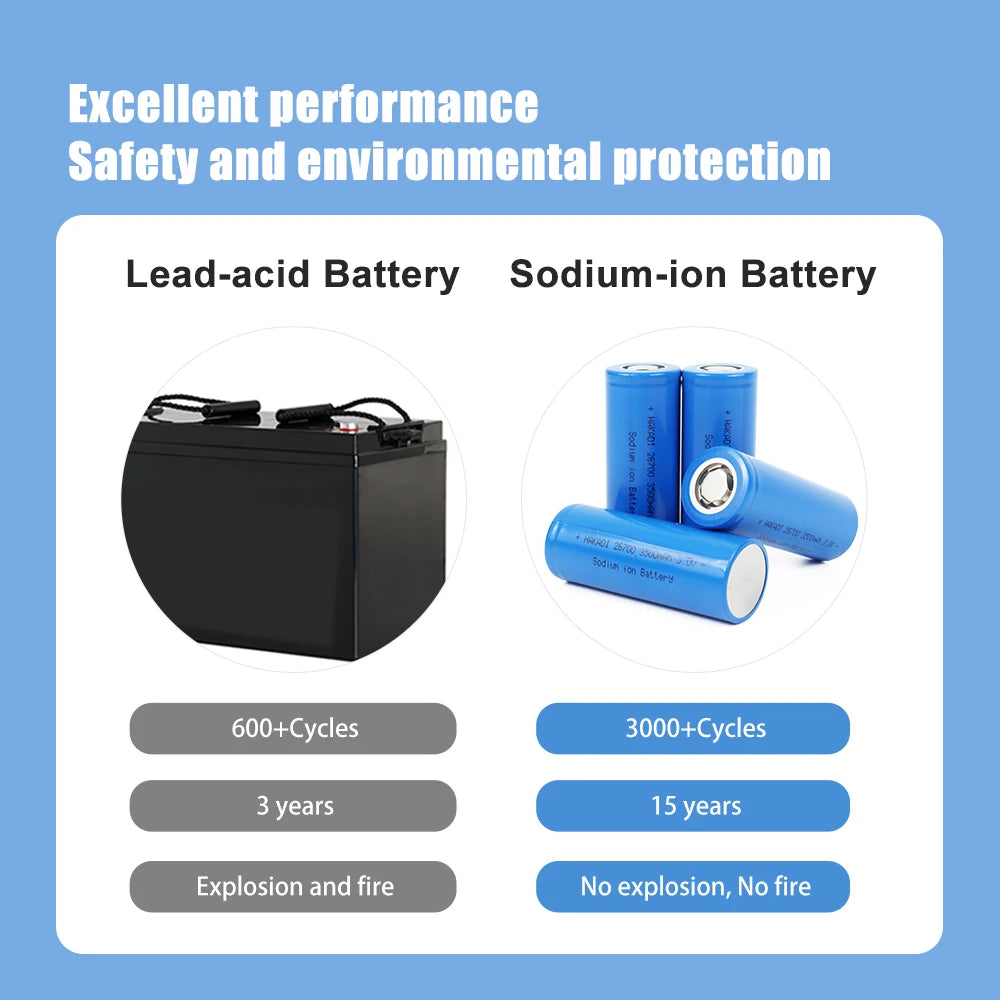
- Safer chemistry. Lower thermal runaway risk than NMC lithium, and no fire-prone cobalt.
- Stable supply chain. Sodium is sourced from seawater and salt, not conflict-prone lithium mines.
- Standard 18650 form factor. Works with the same holders, spot welders, and nickel strip you already use, plus any BMS that lets you set custom voltage thresholds.
The honest trade-off: sodium-ion has lower energy density than LFP. If you need maximum range per pound for a long-distance EV, stick with LFP. If you want a cheaper, cold-tolerant, abundant chemistry for stationary storage, daily-driver mobility, or any pack that sees real winters, sodium-ion is the better pick.
These cells use a layered oxide sodium-ion chemistry, which delivers a wide 1.5V to 4.10V operating range and higher energy density than polyanion (NFPP) or Prussian blue analog cells. If you prioritize cycle life over energy density, see our NFPP sodium-ion cells instead.
How to Build a 12V, 24V, 36V, 48V, or 72V Sodium-Ion Battery Pack
Sodium-ion cells run at 3.10V nominal, slightly lower than LFP (3.2V) and well below lithium-ion (3.7V), so the series counts are different from a lithium build. Use this as your starting point for DIY pack design:
| Target Pack | Series (S) | Nominal Voltage | Full-Charge Voltage | Cells Needed (1P) |
|---|---|---|---|---|
| 12V | 4S | 12.4V | 16.4V | 4 cells |
| 24V | 8S | 24.8V | 32.8V | 8 cells |
| 36V | 12S | 37.2V | 49.2V | 12 cells |
| 48V | 16S | 49.6V | 65.6V | 16 cells |
| 72V | 24S | 74.4V | 98.4V | 24 cells |
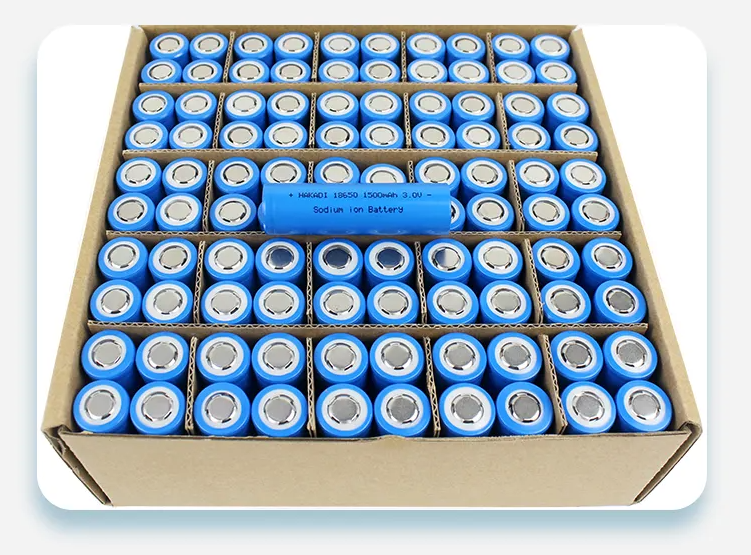
Add cells in parallel (2P, 4P, 5P, etc.) to scale capacity. A 16S5P 48V pack uses 80 cells (fits in our 100-pack with 20 spares) and delivers roughly 7.5Ah at ~370Wh.
BMS and charger settings for sodium-ion (do not use a lithium charging profile):
- Per-cell charge cut-off: 4.10V
- Per-cell discharge cut-off: 1.50V
- Per-cell nominal: 3.10V
- Charge only at 0°C and above
BMS notes. A standard lithium-ion BMS will not work out of the box, the voltage thresholds are wrong. You need either a sodium-ion specific BMS or a programmable lithium BMS that lets you set custom charge and discharge cut-offs. Daly, JK, and ANT BMS units in their programmable variants are commonly used by sodium-ion DIY builders.
Charger. Use a constant-current / constant-voltage (CC/CV) charger set to the pack charge voltage above. Do not use an LFP or lithium-ion charger without reconfiguring the output, the voltage will be wrong for sodium chemistry.
Note on cell mixing. The voltages above are specific to this cell. If you substitute or mix sodium-ion cells from another supplier, check that supplier's datasheet, the charge and discharge cut-offs vary by manufacturer.
Key Features:
- Sodium-ion Chemistry: Layered Oxide Sodium-ion offers a higher voltage range and energy density compared to polyanion or Prussian blue analog chemistries.
- Reliable Power Source: This 3.10V sodium-ion battery cell is designed to provide consistent power for off-grid solar storage, DIY 12V/24V/48V battery packs, e-bikes, and e-mobility builds.
- Versatile Compatibility: Whether you're an electric skateboard enthusiast, a DIY pack builder, an off-grid solar user, or simply in need of a dependable rechargeable cell for your flashlight, this cell is your go-to choice.
- Sustainable Sodium Technology: Our sodium-ion cells are an eco-friendly alternative to lithium-ion, sourced from a more abundant raw material for a sustainable energy storage solution.
- Long-Lasting Performance: With an internal impedance of ≤20mΩ, this cell provides stable electrochemical performance, extended cycle life, and the ability to be charged and discharged repeatedly, saving you money on replacements.
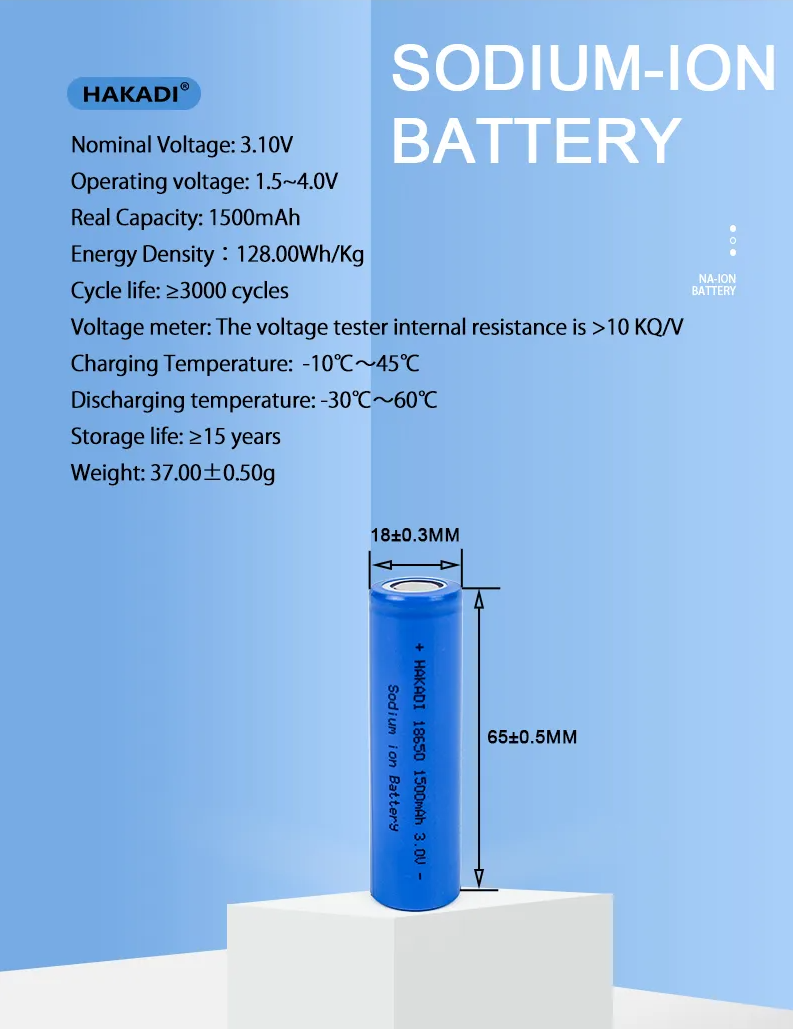
Full Product Specifications:
- Nominal Voltage: 3.10V
- Limited Charge Voltage: 4.10 ±0.05V
- Discharge End Voltage: 1.50 ±0.05V
- Cell Chemistry: Sodium-ion Layered Oxide
- Rated Capacity: 1,500 mAh @ 0.5C
- Typical Capacity: 1,530 mAh @ 0.5C
- Energy Density: 128 Wh/kg
- Internal Impedance: ≤20mΩ
- Charging Temperature: 0°C to 45°C (-10°C to 0°C at ≤0.20C)
- Discharging Temperature: -30°C to 60°C (-30°C to 0°C at ≤0.20C, 45°C to 60°C at ≤0.50C)
- Standard Charge Current: 0.5C (750 mA)
- Standard Discharge Current: 0.5C (750 mA)
- Max Continuous Charge Current: 1C (1,500 mA)
- Max Continuous Discharge Current: 3C (4,500 mA) @ 25°C
- Cycle life: ≥1,000 cycles to 80% SOH (25°C, 0.5C CCCV)
- Dimensions: 18.40 ±0.10 mm diameter x 65.30 ±0.10 mm height
- Weight: 37.0 ±0.5 g
NFPP vs. Layered Oxide: What's the Difference?
| Characteristic | Layered Oxide | NFPP (Polyanion) |
|---|---|---|
| Voltage Range | 1.5 to 4.10 V | 2.0 to 3.8 V |
| Energy Density | Higher | Moderate |
| Cycle Life | ~1,000+ cycles | 3,000 to 4,000 cycles |
| Thermal Stability | Moderate | High |
| Best For | Higher voltage and performance applications (e.g. mobility) | Stationary storage, long-cycle life systems |
Cell Spot Welding Recommendations:
Note: Sodium-ion cells are different from lithium-ion cells and you cannot use too high of a power when spot welding.
- Start with the lowest power setting possible
- Weld for 1.5 seconds max
- If tabs are not welded, then slightly increase power setting and repeat until tabs are secure
Datasheet:
Picked up a batch to build a small backup pack and ran capacity tests on each one. All cells came in within 2% of rated capacity and IR was tight across the lot. Voltage range is different from LFP so you have to plan your BMS settings carefully, but for cold-weather and abuse tolerance these are unbeatable. Will be ordering more.
I wanted to try Sodium type batteries and the seller was helpful in sharing voltage limits and BMS recommendations. Cool store!


Picked up a batch to build a small backup pack and ran capacity tests on each one. All cells came in within 2% of rated capacity and IR was tight across the lot. Voltage range is different from LFP so you have to plan your BMS settings carefully, but for cold-weather and abuse tolerance these are unbeatable. Will be ordering more.
I wanted to try Sodium type batteries and the seller was helpful in sharing voltage limits and BMS recommendations. Cool store!