


Product overview
LiFePO4 · 18650 · LFP · Model PCIFR18650-1500
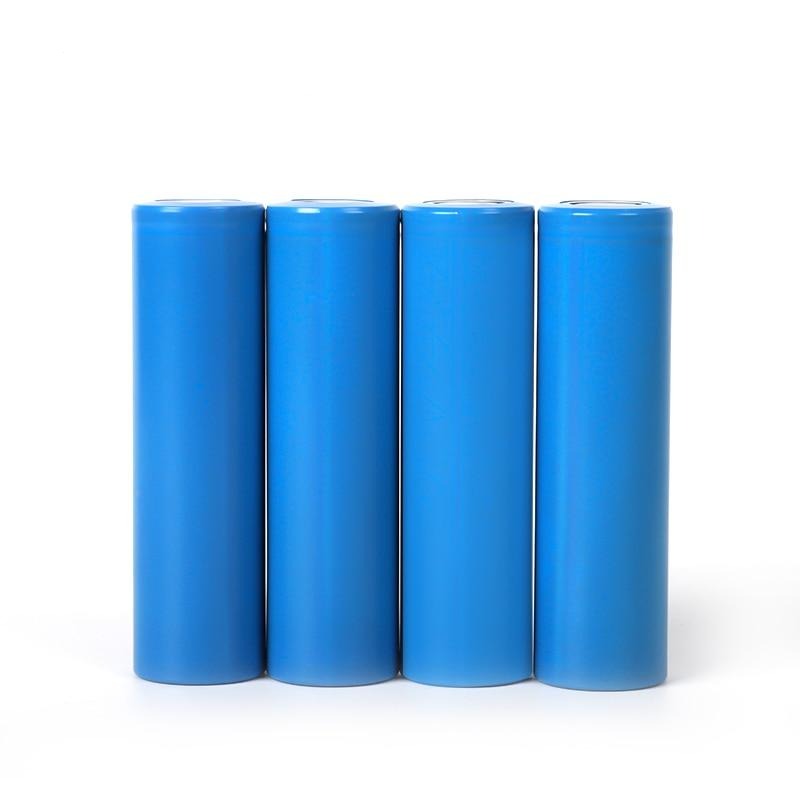
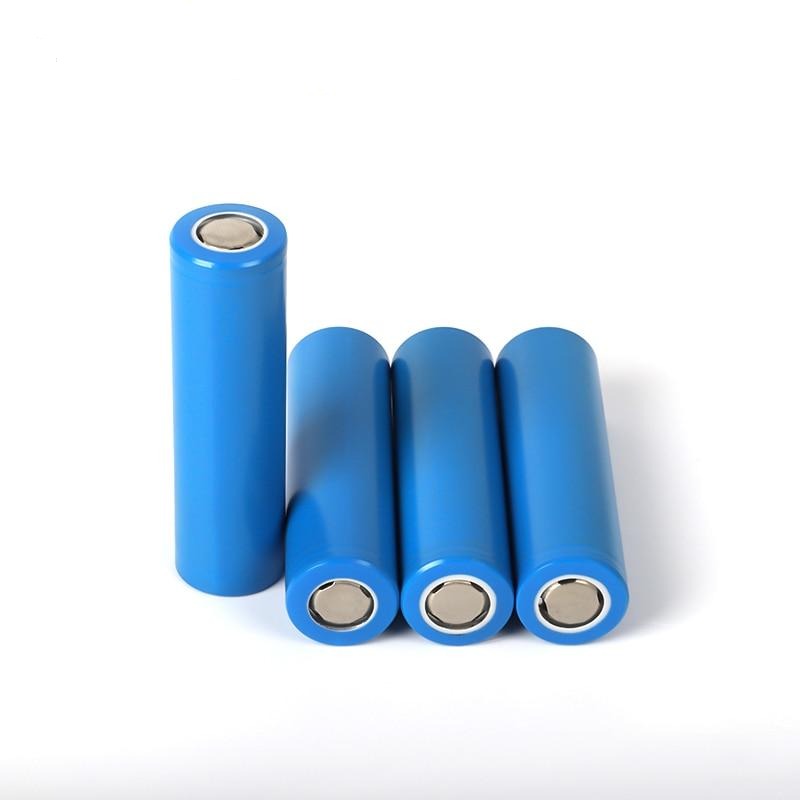
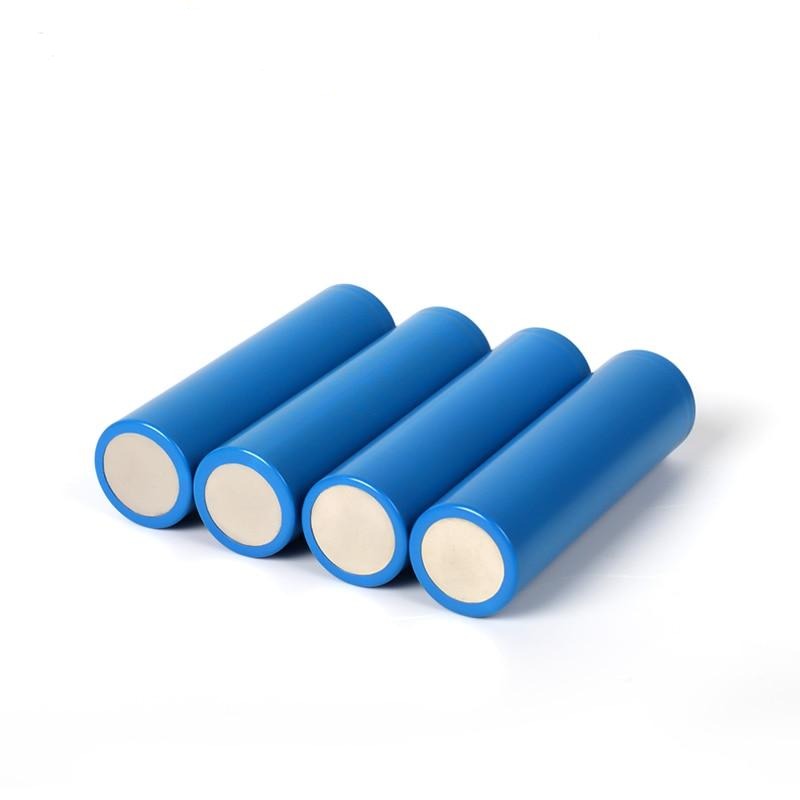
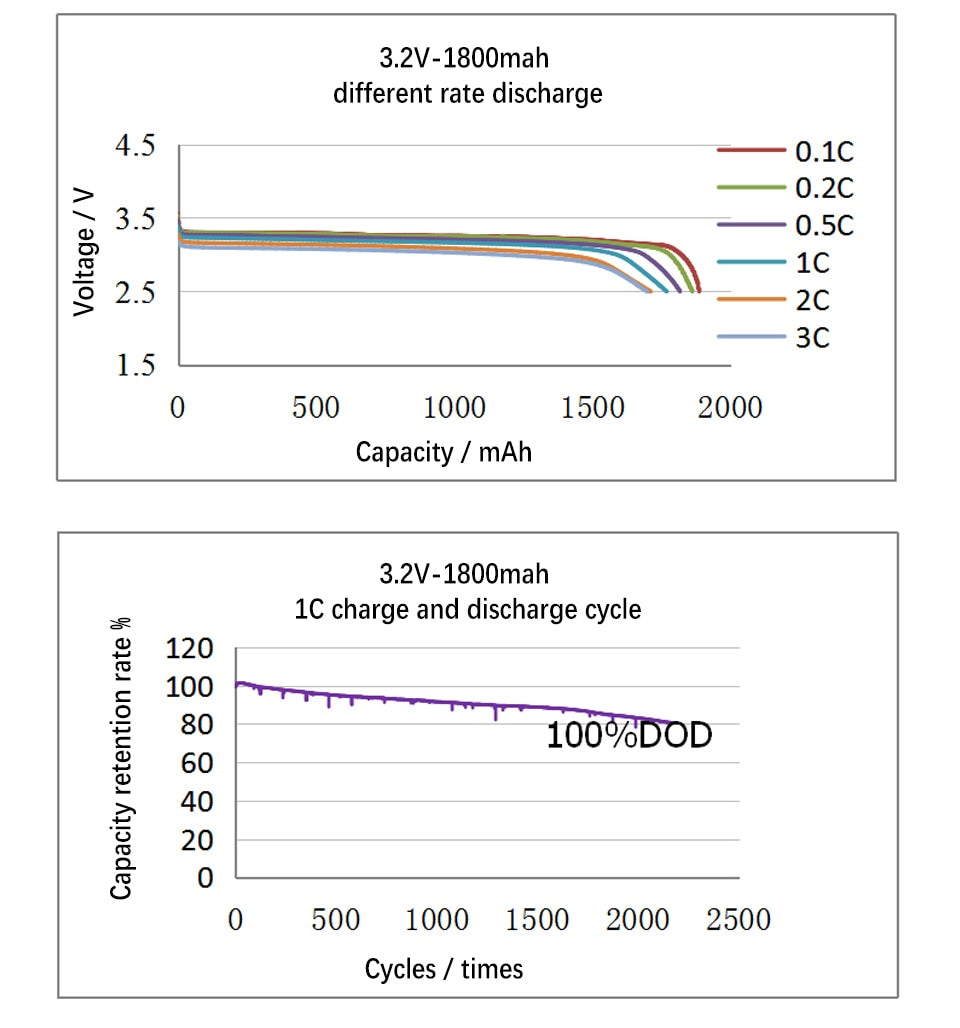
These are 18650 LiFePO4 (LFP) battery cells, 3.2 V and 1,500 mAh, sold in 4-packs for DIY 12V, 24V and 48V battery packs. Each cell delivers 4.5 A (3C) continuous and is rated for 2,000 cycles; on our bench one cell gave 1,446 mAh at 1 A. Charge to 3.60 V per cell (3.65 V max), cut off at 2.5 V, and do not charge below 0 °C; use an LFP charger and BMS, never a lithium-ion one. Four in series make a 12.8 V pack that replaces a small 12V lead-acid battery. Ships from the USA with the datasheet, BMS setpoints for 4S, 8S and 16S, and volume pricing from 4 four-packs.
- OGS part
- LFP-18650-04
- Capacity
- 1,500 mAhrated at 0.2C, room temperature [1]
- Nominal
- 3.2 Vwindow 2.0 to 3.65 V [1]
- Continuous
- 4.5 A3C max discharge [1]
- Charge
- 3.65 V±0.03 V · 0.3 A standard, 0.75 A max [1]
- Cycle life
- 2,000 cycat 0.2C discharge, room temperature [1]
- Discharge temp
- −10 to 60 °Ccharge 0 to 45 °C only [1]
- Build
- Flat top · Unprotected · Bare cell
Dimensions mm, drawn to scale
Mass ≈ 41 g
Flat top, no protection circuit. Dimensions, tolerances and mass from the datasheet [1].
Why this cell
Long life
2,000cycles at 0.2C [1]
About 5 years at one full cycle a day. LFP keeps its capacity well when it sits part-charged, so it suits solar packs that rarely see 100 %.
Drops into 12V systems
12.8 V4S nominal, 14.4 V full
Four in series match a 12V lead-acid system and run 12V inverters, routers and radios. Use an LFP charger and BMS: see Works with this cell.
Flat to the end
96 %of rated capacity at 1 A, on our bench [2]
The voltage holds flat until the last few percent, so a 10.0 to 10.5 V inverter cut-off leaves almost nothing in the cell.
Common applications
- Small 12V packs for routers, ham radio and trail cameras
- LoRa and Meshtastic solar nodes
- Replacement cells for solar lights and small solar generators
- Learning to build packs: a first 4S pack with a BMS
- Lab and classroom work comparing LFP with sodium-ion
- Low-current backup for sensors and controllers
Specifications every value names its source
| Attribute | Value | Condition and source |
|---|---|---|
| Rated · manufacturercopied from the datasheet [1] | ||
| Chemistry | Lithium iron phosphate (LiFePO4, LFP) | [1] |
| Capacity, rated | 1,500 mAh | 0.2C discharge, room temperature [1] |
| Capacity, minimum | Not stated by manufacturer | |
| Nominal voltage | 3.2 V | [1] |
| Charge voltage | 3.65 ±0.03 V | [1] |
| Discharge cut-off | 2.0 V | [1] |
| Standard charge | 0.2C (0.3 A) | [1] |
| Max charge current | 0.5C (0.75 A) | [1] |
| Max continuous discharge | 3C (4.5 A) | [1] |
| Max pulse discharge | Not stated by manufacturer | |
| Internal resistance | ≤ 40 mΩ | AC 1 kHz, fully charged [1] |
| Performance · manufacturerthe datasheet gives cycle life only [1] | ||
| Cycle life | ≥ 2,000 cycles | 0.2C discharge, room temperature. End-of-life capacity not stated [1] |
| Rate capability | Not stated by manufacturer | our bench test gave 96 % of rated at 1 A (0.67C) [2] |
| Capacity in the cold | Not stated by manufacturer | |
| Temperature[1] | ||
| Charge | 0 to 45 °C | no charging below 0 °C [1] |
| Discharge | −10 to 60 °C | [1] |
| Storage | 20 ±5 °C up to 1 year | 0 to 30 °C up to 3 months, −20 to 45 °C up to 1 month. Best at 25 ±5 °C and 50 % charge [1] |
| Calculatedarithmetic on [1] and [2], shown so you can check it | ||
| Energy per cell | 4.8 Wh | 1.5 Ah × 3.2 V |
| Energy density, gravimetric | ≈ 117 Wh/kg | 4.8 Wh ÷ 41 g |
| Energy density, volumetric | ≈ 286 Wh/L | 4.8 Wh ÷ 16.8 cm³ (cylinder, 18.2 × 64.5 mm) |
| Standard discharge | 0.2C (0.3 A) | the rate the datasheet uses for capacity and cycle life [1] |
| Usable capacity, typical inverter window | ≈ 94 to 96 % | 12V inverters cut off near 10.0 to 10.5 V, or 2.5 to 2.6 V per cell. Share of the rated capacity above that, at 1 A [2] |
| Energy per 4-pack | 19.2 Wh | 4 × 4.8 Wh |
OGS bench test our own charge and discharge

- Capacity delivered
- 1,446 mAh 96 % of the 1,500 mAh rating, at 1 A (0.67C) to 2.5 V
- Full drain
- 1,602 mAh 107 % of rating, stepping the load down to 0.1 A at 2.5 V
- Energy back out
- 79 % 4.56 Wh out of 5.77 Wh in, test-lead loss included
One cell, room temperature, 2025-10-25. Discharged at 1.0 A to 2.5 V, then at 0.75 to 0.1 A to 2.5 V, then charged CC-CV at 1.0 A to 3.65 V. Voltage is read at the tester, so under load it reads about 0.25 V low from lead loss.
BMS and charger setpoints
Per-cell values from the datasheet [1] and our bench test [2], multiplied out for common packs.
| Setpoint | Per cell | 4S | 8S | 16S |
|---|---|---|---|---|
| BMS over-voltagethe datasheet charge voltage [1] | 3.65 V | 14.6 V | 29.2 V | 58.4 V |
| Charge voltage (CV)charger setpoint, 0.05 V under the limit. Our LFP chargers ship set to this (14.4 V for 4S) | 3.6 V | 14.4 V | 28.8 V | 57.6 V |
| Nominal[1] | 3.2 V | 12.8 V | 25.6 V | 51.2 V |
| Low cut-off, workingkeeps about 96 % of the rated capacity at 1 A [2]. LFP gives up very little between 2.5 V and the floor | 2.5 V | 10.0 V | 20.0 V | 40.0 V |
| BMS under-voltagedischarge cut-off [1] | 2.0 V | 8.0 V | 16.0 V | 32.0 V |
Works with this cell parts we sell that are set up for it
BMSset for LFP
 12 V LFP BMS, 4S200 A, Bluetooth, active balance$182.00
 24 V LFP BMS, 8S200 A, Bluetooth, active balance$182.00
 48 V LFP inverter BMS, 16S200 A, CAN / RS485 to the inverter$320.00
Chargersset to 3.60 V per cell
 12 V LFP charger, 4S$305.00
 24 V LFP charger, 8Sfrom $626.00
 48 V LFP charger, 16Sfrom $458.00
Pack build18650 format
 4S 18650 holder$28.00
 Pure nickel stripfrom $11.00
 801D spot welder$503.00
Testcheck cells before you build
 EBC-A20 capacity tester$213.00
 Internal resistance tester$107.00
Questions builders ask
What BMS do I need for LFP 18650 cells?
Any LFP BMS: over-voltage 3.65 V and under-voltage between 2.0 and 2.5 V per cell. Size it for the current you need; each cell gives 4.5 A max, so a 4S2P pack is good for about 9 A. Our 12V, 24V and 48V LFP BMS ship set for LFP.
Can I charge LFP cells below freezing?
No. The datasheet allows charging from 0 to 45 °C only. Set your BMS to block charging below 0 °C, or add a heater. Discharging is fine down to −10 °C. If your build stays cold, look at our sodium-ion 18650s.
How much current can these cells deliver?
4.5 A continuous per cell (3C). For more current, add cells in parallel: four in parallel give 18 A. For power tools or jump starters, a high-rate cell such as our NFPP sodium 18650 is a better fit.
Can I use a lithium-ion charger?
No. Lithium-ion (NMC) chargers go to 4.2 V per cell, far past this cell's 3.65 V. Use an LFP charger: 14.4 to 14.6 V for 4S. Our LFP chargers ship set to 3.60 V per cell.
Can I put these in a flashlight in place of a lithium-ion 18650?
Only if the light accepts 3.2 V LiFePO4 cells. They run at 3.2 V, not 3.6 to 3.7 V, so many lights run dimmer, and a lithium-ion charger will overcharge them.
Related reading
- Test report v1: sodium-ion vs LFPOur discharge curves for this cell next to two sodium cells
- How to spot weld 18650 cellsNickel strip, weld settings and insulator rings
- How to choose a BMSJK vs Seplos, JBD and Daly
- Choosing fuses for a lithium batteryProtect the pack and the wiring
- Is sodium-ion right for your build?When cold weather points to sodium instead of LFP
Sources
- [1] Manufacturer specification for the PCIFR18650-1500 cell, revision V3, 1 page. Linked under Downloads.
- [2] OGS bench test, one cell from our stock, 2025-10-25, 1.0 A, room temperature. A measurement, not a manufacturer rating.